
What is a CT SPECT scan?
A CT SPECT scan (Single Photon Emission Computed Tomography combined
with CT) is an imaging test used to assess bone activity in the spine. It combines a
CT scan, which provides anatomical detail, with a nuclear medicine scan that
shows areas of increased metabolic activity in bone.
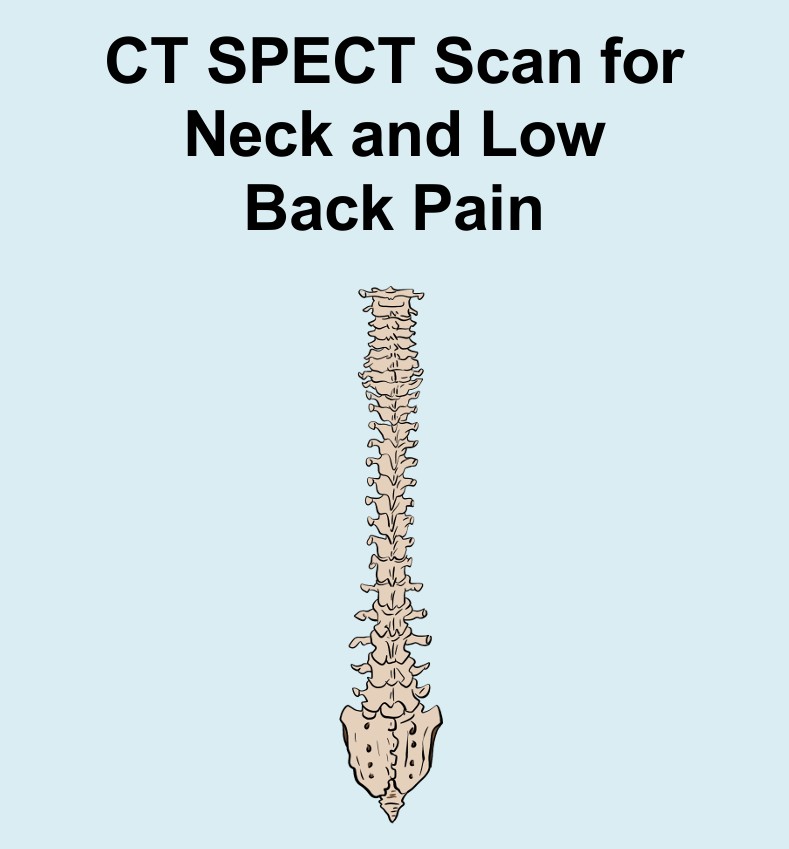
Why is this scan performed?
This scan may be requested when there is ongoing neck or low back pain and the source of symptoms is unclear. It can help identify areas of increased bone activity that may correspond to inflammation, degeneration, or mechanical stress. It is sometimes used when other imaging (such as MRI or CT) shows multiple abnormalities and further clarification is required
What does the scan involve?
The procedure is carried out in stages. A small amount of radioactive tracer is injected into a vein, usually in the arm. After the injection, there is a waiting period of approximately 2–3 hours to allow the tracer to circulate and localise in the bones. Imaging is then performed using a scanner. During the scan, you will be asked to lie still for approximately 20–30 minutes.
Are there any risks?
The scan involves exposure to a small amount of ionising radiation from both the CT component and the radioactive tracer. The level of exposure is generally comparable to, or slightly higher than, a standard CT scan. The amount used is kept as low as reasonably practicable.
There may be minor discomfort at the injection site. Adverse reactions to the tracer are rare.
If you are pregnant, think you may be pregnant, or are breastfeeding, it is important to inform the clinical team before the scan.
After the scan
You can usually resume normal activities immediately after the scan. It is advisable to drink fluids to help eliminate the tracer from the body. The results will be reviewed by a specialist and discussed with you at a follow-up appointment.